

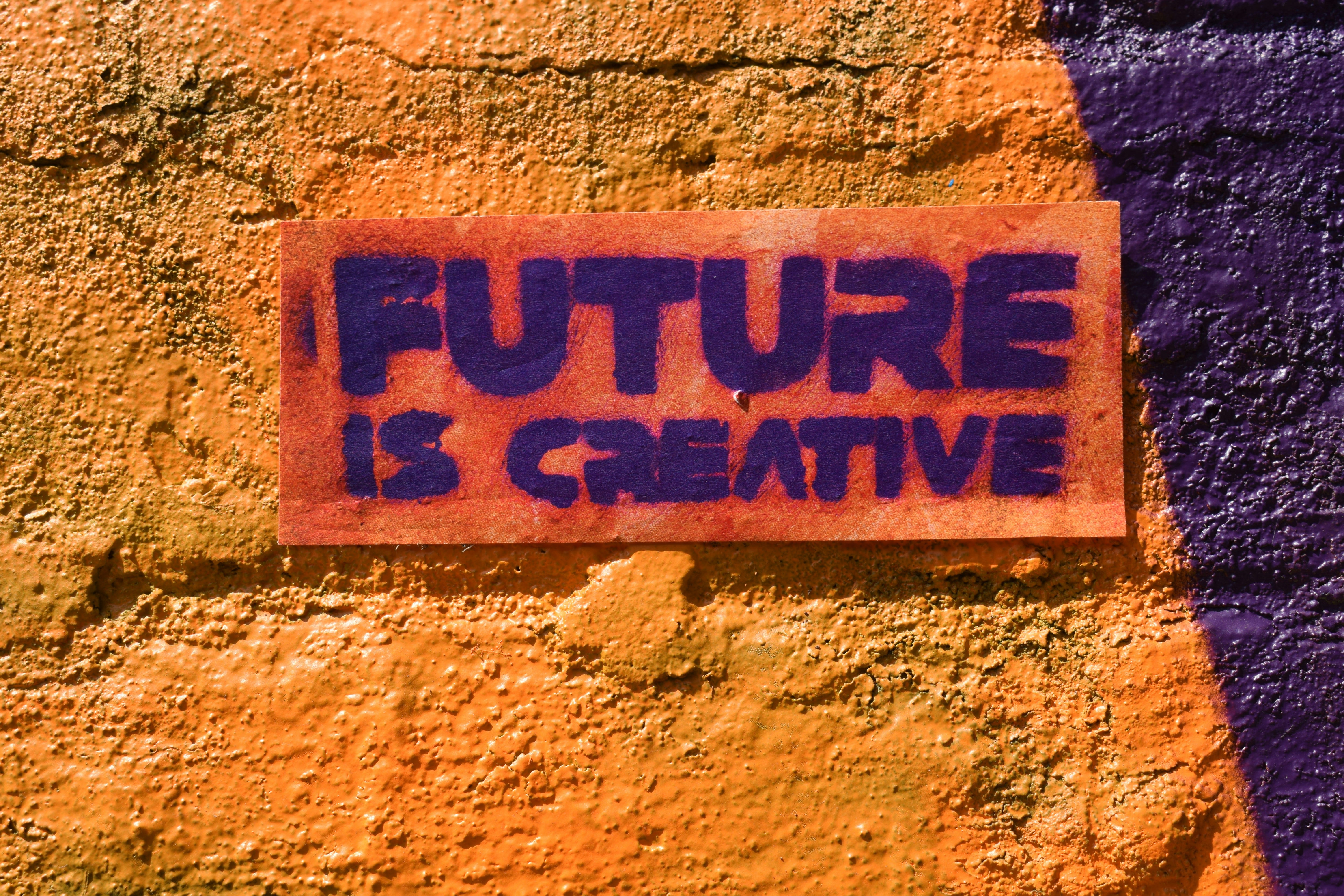
I have never been a programmer.
I have never been a developer. I don’t have a technical background, and for most of my career, I assumed there was an entire category of things I couldn’t build.
Apps. Software. Automated tools. Anything that required code.
Those belonged to another world, inhabited by people who understood programming languages, terminals, APIs, repositories, and all the other words I vaguely recognized but didn’t really know what to do with.
I could have ideas for those things. I could explain what I wanted them to accomplish. I could probably write the copy, think through the user experience, or identify the problem they should solve.
But actually build them?
That was where my involvement ended.
At least, that’s what I thought.
I’ve always considered myself a creator
The funny thing is that I’ve never had trouble thinking of myself as a creative person.
The Creator is actually one of the brand archetypes I’ve always resonated with most. Creating has been part of my identity for as long as I can remember.
I write. I paint. I come up with ideas and turn them into things that didn’t exist before. I’ve built content strategies, newsletters, campaigns, frameworks, workshops, and countless other things throughout my career.
But somehow, I had drawn an invisible line around technology.
Creativity lived on my side of that line. Technology lived on the other.
I could use technology to create, of course. I’ve been doing that for years. But I didn’t think I could create technology itself.
Over the past few years, and particularly as I’ve started experimenting more deeply with ChatGPT assistants and Claude Cowork, that distinction has become much less clear.
Because now I can sit down with an idea and say:
“This is what I want to build.”
And instead of the conversation ending there because I don’t know how to build it, that’s where the conversation begins.
From “I don’t know how” to “how could we do this?”
This has probably been one of the most exciting changes AI has brought into my work.
I can describe the problem I’m trying to solve. I can explain what I want a tool to do, who will use it, what information it needs, what the output should look like, and how I want the process to work.
Then I can ask AI to help me figure out how to make it happen.
What should I build first? What instructions does the tool need? What am I missing? Is there a simpler way to accomplish this? Why isn’t this working? How could I improve it? What should happen if the user gives it this kind of information instead of that kind?
It becomes an iterative process.
I ask. It proposes. I test. Something doesn’t work. I go back. We troubleshoot. I change the instructions. I test again. I realize there’s another possibility I hadn’t considered. I add it. Eventually, something that started as an idea begins to actually do something.
I’ve built custom GPTs. I’ve been experimenting with Claude Skills and Cowork. I’ve created tools around marketing workflows and tasks I understand because I’ve spent years doing them manually.
And every time one of these experiments actually works, there’s still a tiny part of me thinking:
Wait. I made this?
Not alone, obviously. AI is doing things I couldn’t do myself. That’s precisely what makes this moment so interesting to me.
I’m bringing the domain knowledge, the problem, the judgment, the desired outcome, the testing and the decisions. The AI brings capabilities I don’t have and helps translate what I’m trying to accomplish into something functional.
I’m learning to co-create with it.
AI has expanded what “creative” means to me
This experience has made me rethink something much bigger than whether I can build a GPT or a Claude Skill.
It’s changing my understanding of creativity itself.
For a long time, I associated my Creator side with writing, painting and other obviously creative endeavors. Creativity meant starting with a blank page or canvas and turning an idea into something tangible.
But isn’t that also what I’m doing when I build one of these tools?
There’s still a blank page.
There’s still an idea.
There’s still that messy middle where the thing in your head doesn’t quite match the thing in front of you.
There’s experimentation, frustration, iteration and the occasional moment when something suddenly clicks.
The medium is different.
Instead of paint, words or images, sometimes I’m working with instructions, workflows, knowledge bases and AI capabilities I barely knew existed a few years ago.
And I find that incredibly exciting.
Technology no longer feels quite as much like something happening somewhere else, built exclusively by people with skills I don’t have.
There’s a small corner of it where I can make things too.
Of course, this doesn’t suddenly make me a developer
There are limits to this, and I think they’re important to acknowledge.
Being able to build something with the help of AI doesn’t give me the expertise of someone who has spent years studying computer science, software engineering, security, architecture or any number of technical disciplines.
There are things I don’t know. There are things I don’t even know that I don’t know.
But that’s true of every profession.
I wouldn’t expect someone to become a marketing strategist because they can ask ChatGPT to create a marketing plan. I wouldn’t expect someone to become a designer because an AI image generator can produce an illustration for them. Access to a capability and deep professional expertise aren’t the same thing.
What has changed is the entry point.
I don’t need to become a developer before I’m allowed to experiment.
And that distinction matters.
Because for someone like me, the biggest barrier was often not a lack of ideas. It was the assumption that implementing those ideas required skills so far outside my world that there wasn’t much point in trying.
AI has lowered that barrier enough for me to step over it.
Work keeps changing underneath us
There is another side to all of this that I don’t want to romanticize.
As a non-technical professional, I sometimes struggle with just how quickly work is changing.
Actually, I think a lot of us do.
There’s always another model, another tool, another feature, another workflow we’re supposedly falling behind on. Something you learned six months ago has changed. Something that seemed impossible last year is now a button inside an app.
And this isn’t confined to people working in technology.
Marketing is changing. Writing is changing. Design is changing. Customer service is changing. Education is changing. Research is changing. Operations are changing. Management is changing.
Whatever you do for work, AI has probably touched some part of it already.
Keeping up can be exhausting.
I don’t think the answer is to chase every new tool or force ourselves to become experts in everything AI can do. I’m increasingly interested in a different question: What becomes possible for me now that wasn’t possible before?
That’s a much more exciting question to explore.
I’m touching things I wouldn’t have touched before
A few years ago, if you had shown me something that looked remotely technical, my instinct probably would have been to assume it wasn’t for me.
Now I’m much more likely to poke at it.
I open things I don’t completely understand. I ask questions that might be incredibly basic. I experiment. I break things. I ask AI why I broke them. I try again.
Sometimes I discover that what I wanted to do is more complicated than I expected.
Sometimes I discover that I can actually do it.
And sometimes the experiment itself gives me another idea.
That might be the part of this shift I value most.
AI hasn’t only given me new tools. It has made me more willing to enter rooms I previously assumed were closed to me.
I’m still a non-technical person. I’m still a writer, a marketer, a strategist and someone who would rather start with the problem than with the technology.
But now I’m also building things.
Small things, imperfect things, useful things, experimental things.
Things I wouldn’t have attempted a few years ago because I had already decided they were outside the boundaries of what someone like me could create.
Those boundaries are moving.
And amid all the uncertainty about what AI will mean for our jobs, our careers and the way we work, I’m glad some of those boundaries are moving too.
Because perhaps one of the most interesting things about this moment isn’t only what AI can create.
It’s who gets to create now.